Machining is one of the most widely used manufacturing processes—essential for shaping metals and components with precision.
Understanding the costing of machining processes is essential for accurate pricing, efficient production, and better resource planning.
This guide explains the meaning, types, and key cost components of machining, helping manufacturers control expenses, improve productivity, and ensure high-quality output.

This guide explains why accurate costing is crucial in today’s competitive fabrication and manufacturing industries.
What Is Machining Costing?
Machining costing refers to the systematic calculation of all expenses incurred to machine a component from raw material to finished product.
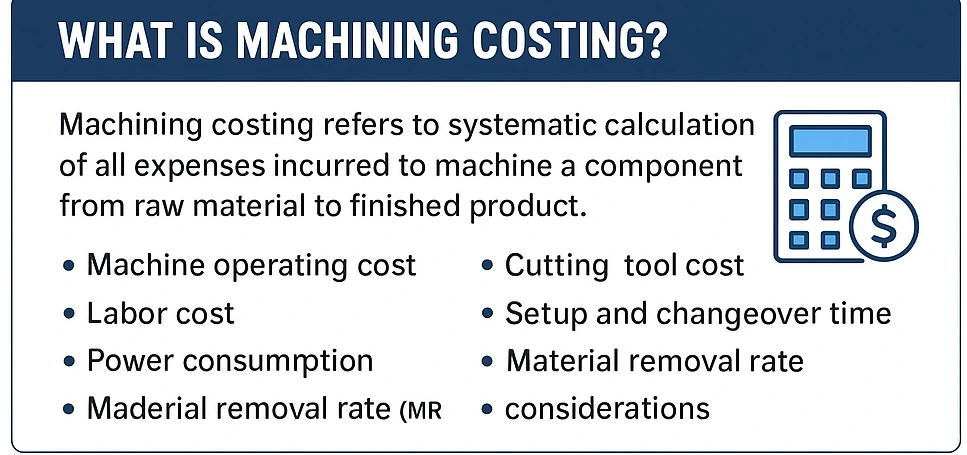
It includes:
- Machine operating cost
- Cutting tool cost
- Labor cost
- Setup and changeover time
- Power consumption
- Material removal rate (MRR) considerations
- Depreciation and overheads
Proper machining cost estimation ensures the component is manufactured economically while maintaining required tolerances and quality.
Types of Machining Processes Considered in Costing
Costing varies based on the machining method used.

Key machining types include:
1. Turning
Performed on a lathe to remove material from a rotating workpiece. Costs depend on cutting speed, feed, part diameter, and tool life.
2. Milling
Removes material using a rotating cutter. Cost influenced by machine power, number of passes, tooling, and setup time.
3. Drilling
Used to create holes; cost depends on diameter, depth, and cycle time.
4. Boring
Internal enlargement of holes; generally costlier due to precision tooling.
5. Grinding
High-precision finishing process; cost includes wheel wear and slower MRR.
6. CNC Machining
Automated machining with higher accuracy and higher machine hourly rates; cost depends on program complexity and cycle time.
7. Shaping & Planning
Used for flat surfaces; cost is based on stroke length and machine output.
8. Broaching
Fast process but involves expensive broach tools, affecting cost structure.
Key Cost Components in Machining
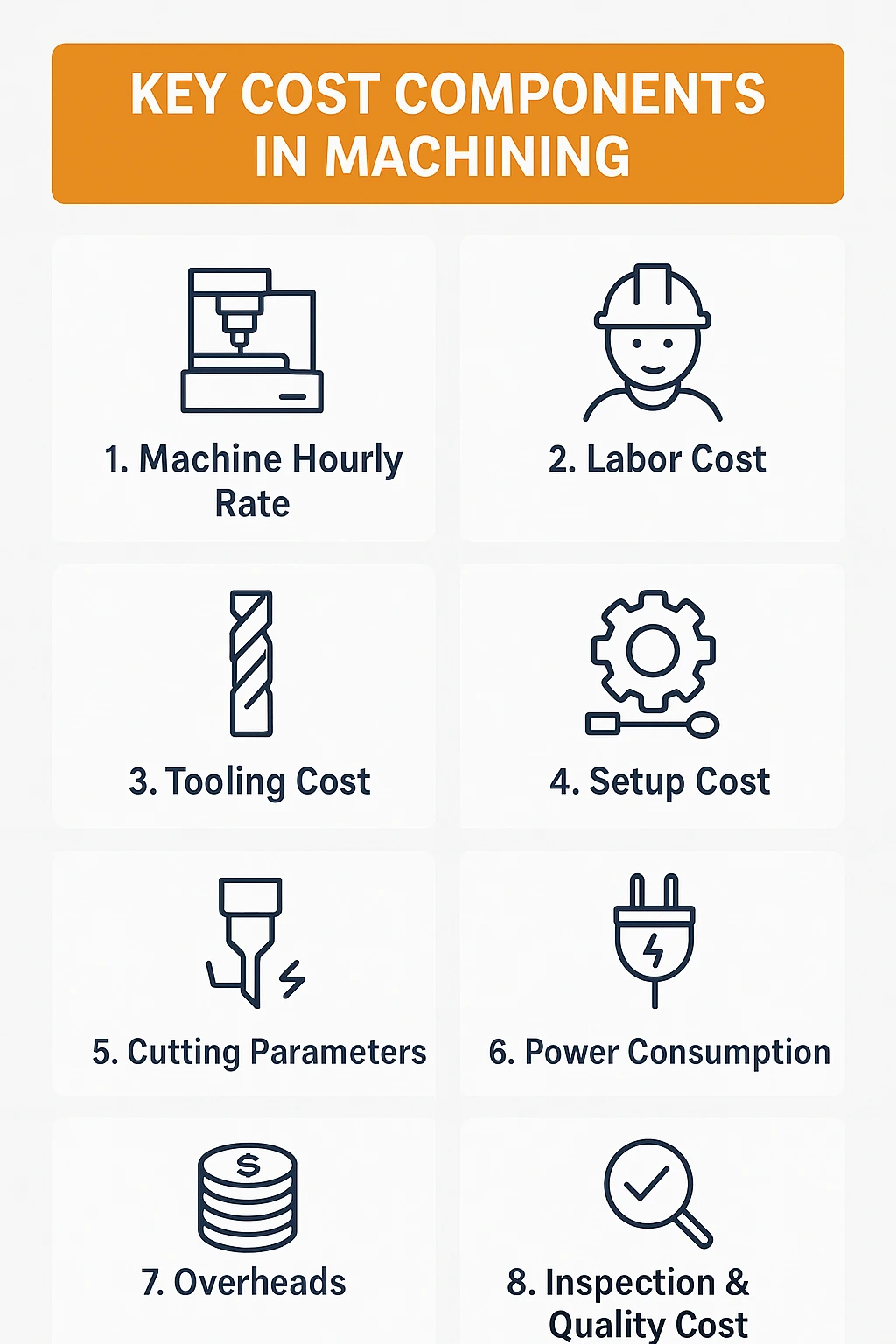
To estimate machining cost accurately, the following factors must be considered:
1. Machine Hourly Rate
Includes depreciation, maintenance, interest, and operating expenses.
2. Labor Cost
Operator wages, skill level, and supervision requirements.
3. Tooling Cost
Tool wear rate, tool life, re-sharpening, and replacement cost.
4. Setup Cost
Fixture preparation, part alignment, and tool change time.
5. Cutting Parameters
MRR, spindle speed, feed rate, and depth of cut, which directly affect cycle time.
6. Power Consumption
Electricity usage based on machine load and cycle duration.
7. Overheads
Indirect factory expenses distributed per hour or per part.
8. Inspection & Quality Cost
Accuracy checks, CMM measurements, and rejection/rework cost.
Importance of Machining Costing
Machining costing plays a vital role in manufacturing for several reasons:
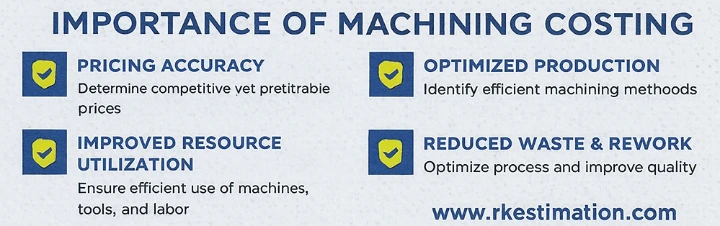
✔ Pricing Accuracy
Helps determine competitive yet profitable selling prices.
✔ Optimized Production
Identifies the most cost-effective machining method and parameters.
✔ Improved Resource Utilization
Ensures machines, tools, and manpower are used efficiently.
✔ Better Job Planning & Scheduling
Accurate time and cost estimation helps in forecasting delivery timelines.
✔ Reduced Waste & Rework
By understanding cost drivers, manufacturers can optimize processes and improve quality.
✔ Budgeting & Cost Control
Supports financial planning, profitability analysis, and continuous improvement.
Conclusion
Accurate costing of machining processes is essential for maintaining profitability, improving productivity, and achieving consistent product quality. Whether you are performing turning, milling, drilling, or CNC machining, understanding the cost components involved empowers manufacturers to make informed decisions and stay competitive.